

Qatar’s Ministry of Education and Higher Education has rolled out an electronic registration system for students with disabilities seeking admission to government schools, marking a new step in its drive to modernise educational services and enhance digital accessibility.
The new platform is intended to ease application procedures for parents and guardians while improving clarity and transparency in the placement process. Student allocation will continue to be based on approved geographic criteria, in line with existing regulations.
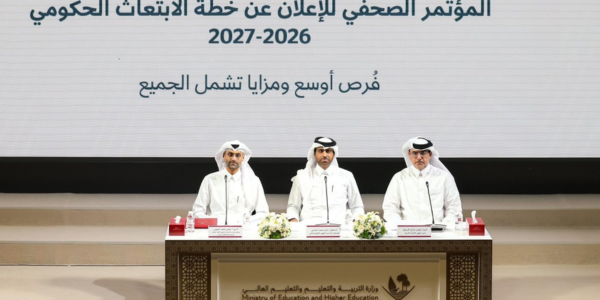
Speaking at a press briefing on Monday, Amna Ali Al Mulla, Acting Director of the Special Education and Inclusive Education Department, said the service accommodates a broad range of cases. These include students with autism spectrum disorder, intellectual, hearing, visual and physical disabilities, as well as those with developmental delays and brain injuries.
She explained that applications must be supported by an accredited medical report issued by the relevant health authorities. Once submitted, files are referred to a student support services centre, where specialised evaluations are conducted to identify the most appropriate educational placement for each student.
The ministry also pointed to recent growth in specialised education facilities. Qatar currently operates seven Al Hidaya schools, in addition to Rawdat Al Jiwan, an early intervention centre that is expected to admit 50 students next year. Meanwhile, Warif Academy run in collaboration with Qatar Foundation is preparing to increase its intake from 56 to 90 students, addressing rising demand among students with severe functional needs.
In a related briefing, Warda Mohammed Aqeel, Assistant Director of Schools and Student Affairs, noted that more than 4,000 students with disabilities or enrolled in inclusion programmes are currently studying in 99 public schools, out of a total of 229 across the country.
She added that the past two years have also seen the opening of 16 new, fully equipped school buildings. These facilities include dedicated classrooms operating under an individualised educational support framework, using adapted curricula and digital learning tools tailored to students’ needs.
From a technical perspective, Mona Salem Al Fadhli, Director of Information Systems, said the registration service is available through the ministry’s Public Services electronic platform. Parents are required to update employment information and upload essential documents, such as birth certificates and medical reports.
Applications can be followed electronically, beginning with an administrative review before being forwarded to the Rou’a advisory centre for final assessment. Parents are kept informed throughout the process via text message notifications, including alerts for missing or incomplete documentation.
The ministry said the initiative aligns with its broader strategy to build a more inclusive and sustainable education system, supported by integrated data and customised services that respond effectively to the needs of Qatari society.